How a document moves through the system
1
The client authenticates
The user’s client application connects over HTTP/HTTPS to the Application Server asking for user authentication.
2
The client sends the document images
The user’s client application sends document images to the Application Server. It sometimes sends additional information as well, which the Application Server uses to determine what processing settings to apply.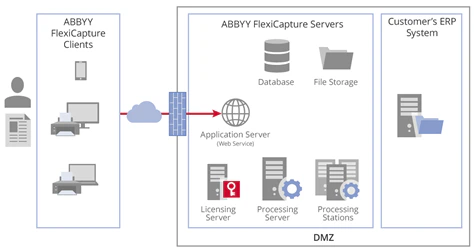
3
The Application Server stores the images and creates records
The Application Server saves the images to the FileStorage. In the Database, it creates a set of records: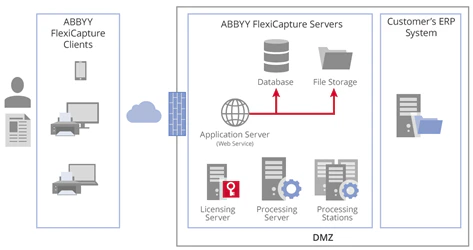
- The arrival of a new document for processing
- The current processing stage of the document
- The processing settings to apply
- The path to the document images in the FileStorage
4
The Processing Server assigns a task
The Processing Server regularly contacts the Application Server for new processing tasks. When it learns about a new document and settings to apply, it assigns a task to a free Processing Station.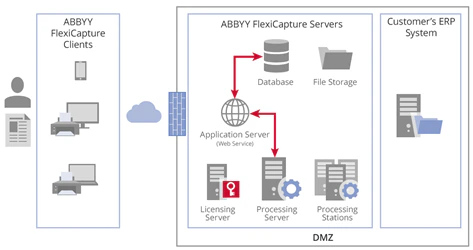
5
The Processing Station collects the task details
The Processing Station gets more task details from the Application Server, including: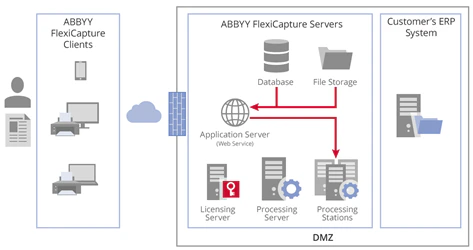
- Document images
- A set of processing operations to perform
- Processing settings to apply
6
The results return to the Application Server
After processing is complete, the results arrive at the Application Server. It updates the corresponding data in the FileStorage and the document status in the Database.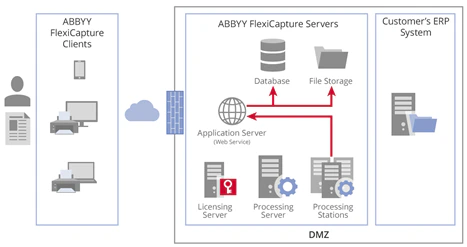
7
Verifiers review the captured data
The processed document can be reviewed by human verifiers if: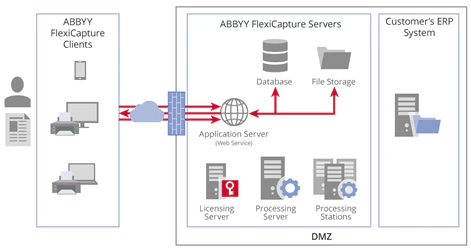
- Processing settings and automated checks allow this
- These people have certain access rights
- They can use a verification client (local, web, or mobile) specifically installed for this task
8
The Processing Station exports the results
A fully processed document goes back to its Processing Station. The Station converts the images and data into the required formats and exports them to the customer’s ERP system. It then notifies the Application Server that the job is done.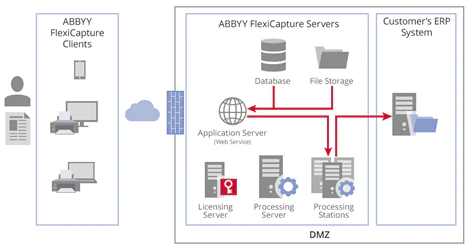
9
The Application Server records the statistics
The Application Server marks the document as processed. It collects processing statistics for the document, for each stage it has passed through, and records them in tables for generating processing reports.
10
FileStorage retains the document until cleanup
The processed document goes to the FileStorage and remains there until the end of the storage time set by the customer. The Application Server then deletes its images from the FileStorage and erases all records in the Database.
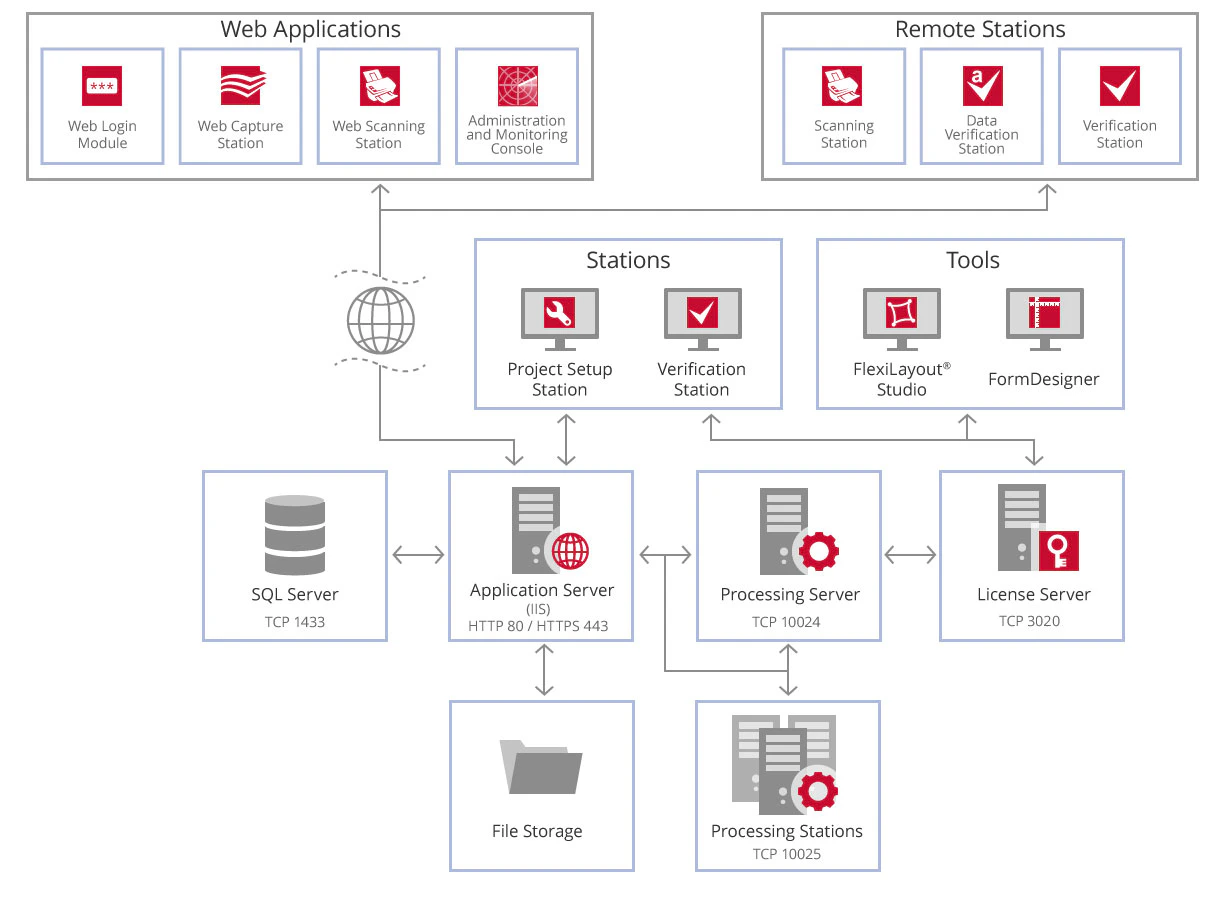
How the components connect
The FlexiCapture components interact for both document processing and service tasks, for example license checks.