
Only a Tenant Administrator can create or manage Public API Clients.
Creating a Public API Client
1
Open Configuration
In Vantage, click Configuration in the left pane.
2
Start client creation
In the Tenant Administration dialog box, do one of the following: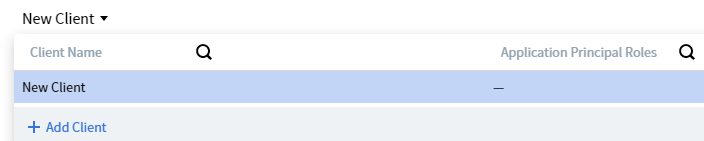
- First client in this tenant: click Create API Client.
- Any subsequent client: click Public API Client, and then on the Public API Client page open the New Client drop-down list and click Add Client.
3
Copy the Client ID and Client Secret
In the Client Created dialog, copy each value by clicking its copy icon. Alternatively, click Save to File to download a TXT file containing both values.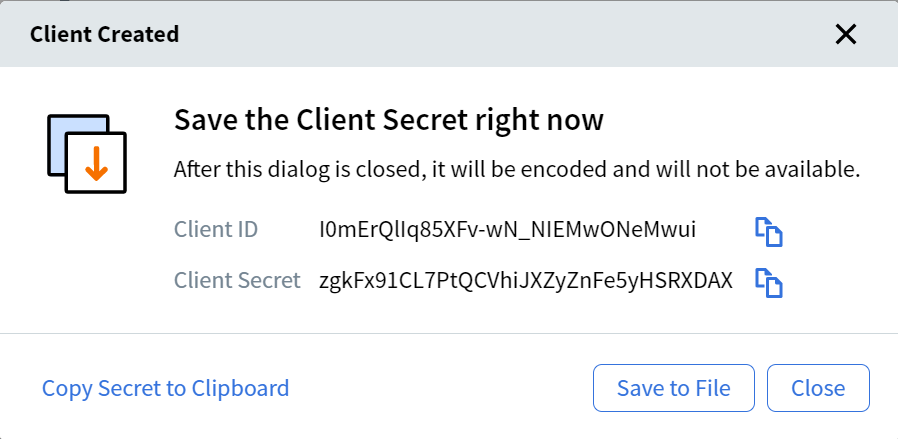
4
Close the dialog
Click Close. The Public API Client page opens, where you can configure the new client.
Configuring a Public API Client
After creating a Public API Client, configure its settings. To open a client’s settings, click the client’s name on the Public API Client page, or search by client name or application principal roles.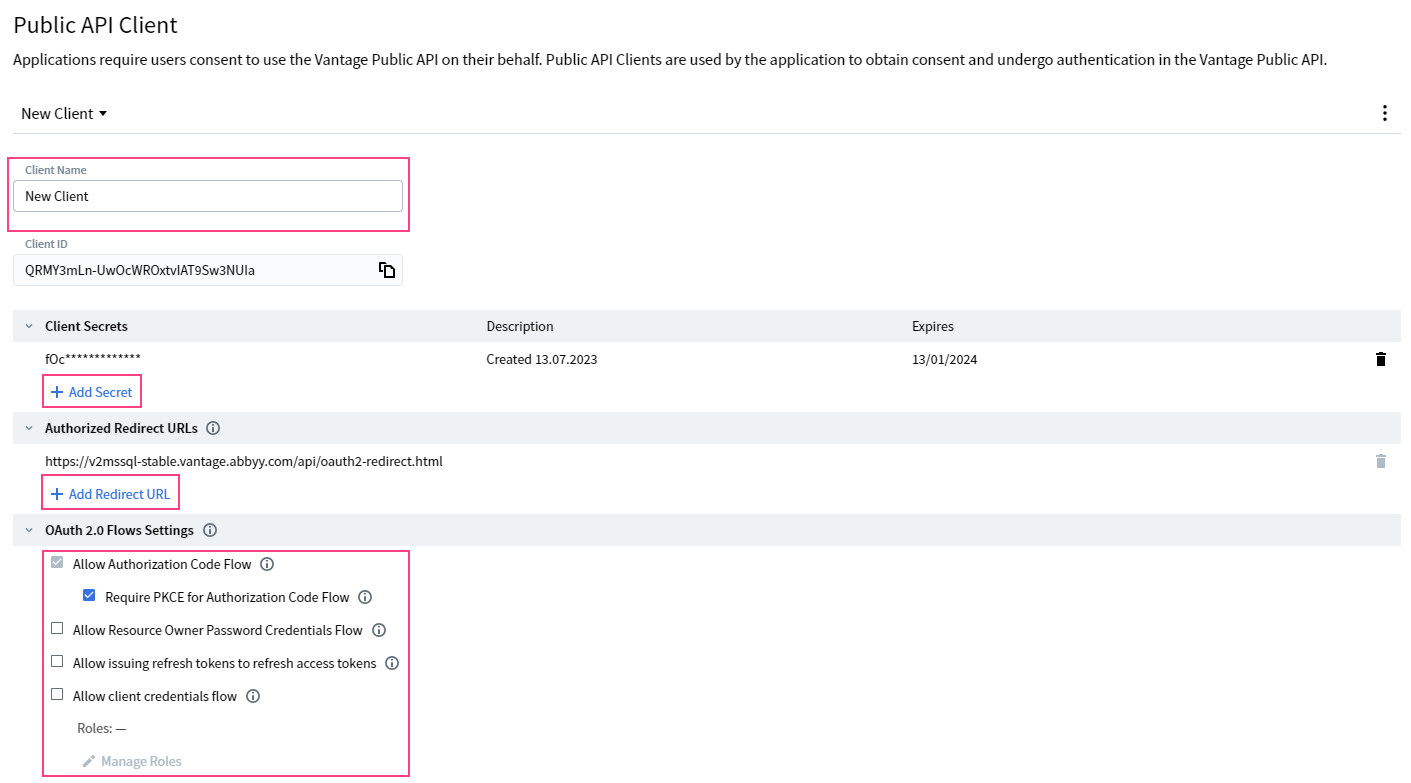
1
Name the client
In the Client Name field, enter a name that identifies this client.
2
Manage secrets
Click Add Secret to create a new client secret. By default, the new secret expires in 6 months — you can set the expiration from 1 day up to 36 months.
3
Add redirect URLs
Click Add Redirect URL and enter each URL you want to allow authorization redirects to.
4
Configure OAuth 2.0 flows
In the OAuth 2.0 Flows Settings section, select one or more flows the client can use:
- Allow Authorization Code Flow — a secure authentication scheme where the application sends the authentication request directly to the Vantage authorization server. The server verifies credentials and returns an authorization code. This flow is enabled for all Vantage API clients.
- Require PKCE for Authorization Code Flow — strengthens security for public clients by letting Vantage verify that the application requesting the access token is the same one that initiated authentication.
- Allow Resource Owner Password Credentials Flow — lets users authenticate with their username and password. The application has direct access to the user’s password, so use this only with applications the user fully trusts.
- Allow issuing refresh tokens to refresh access tokens — lets the client issue refresh tokens to renew access tokens without prompting the user. Applications must store refresh tokens securely.
- Allow client credentials flow — grants applications access to the Vantage API via the OAuth 2.0 Client Credentials flow. Roles are determined by the Manage Roles setting below this option.
The Resource Owner Password Credentials flow does not work when an External Identity Provider is configured. See Authentication.
5
Set token lifetimes
In the Token Lifetime Settings section, configure:
- Access Token — the period during which an issued access token grants access to Vantage. Default: 24 hours.
- Refresh Token — the absolute period starting from the issuance of the first access token, during which the refresh token can renew the access token. Default: 30 days.
Deleting a Public API Client
To delete a client, click its icon on the Public API Client page, and then click Delete Client.