
IIS disables detailed error responses for certain HTTP request errors by default, because they can reveal identifying information about the application. This affects client-side errors with status codes from 400 to 499, and server-side errors from 500 to 599. You can enable detailed responses in IIS Manager or by editing the web.config file.

Enable detailed errors in IIS Manager

1

Open the Error Pages settings

Launch IIS Manager, select your website in the treeview, and double-click the Error Pages icon on the site home page.
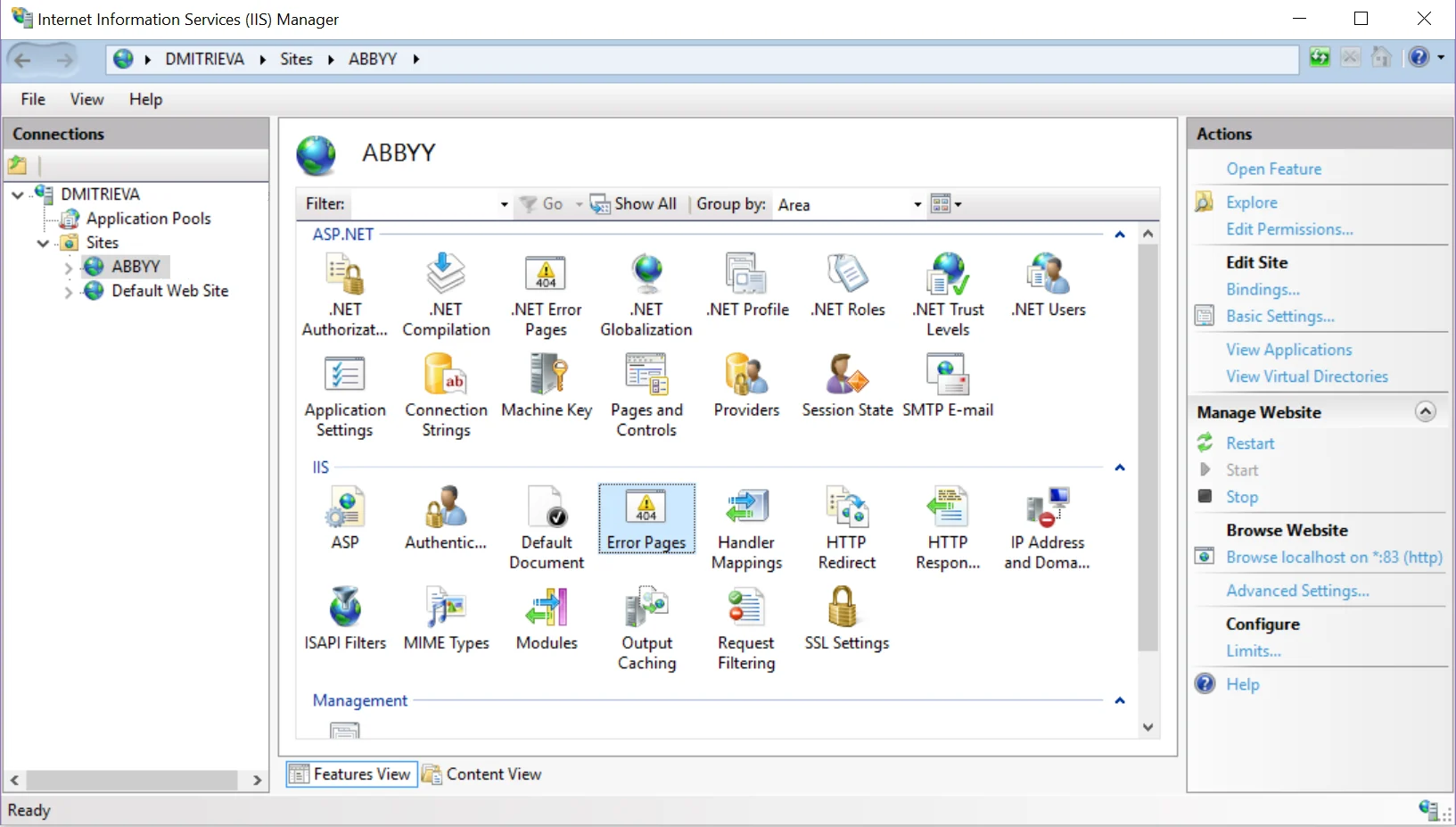
Screenshot of IIS Manager with a website selected and the Error Pages icon highlighted on the site home page.
2

Turn on detailed errors

In the Actions pane, click Edit Feature Settings. In the Edit Error Pages Settings dialog box, select Detailed errors and click OK.
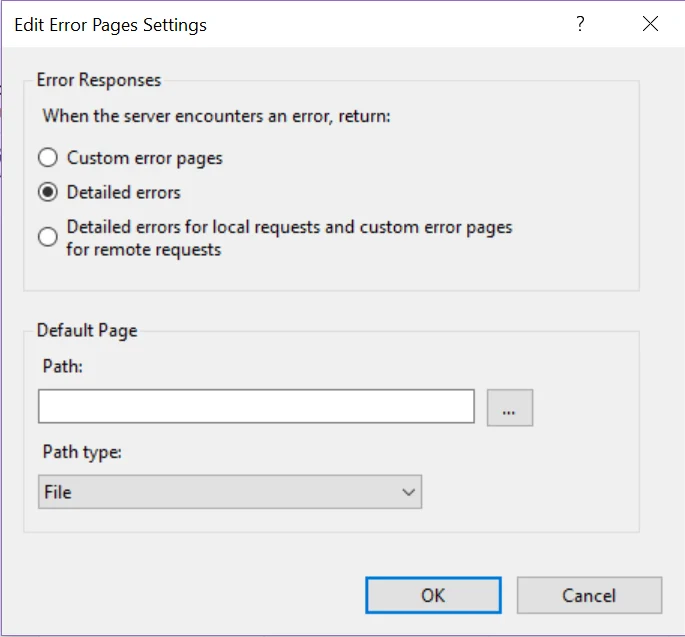
Screenshot of the Edit Error Pages Settings dialog box in IIS Manager with the Detailed errors option selected.

Enable detailed errors in web.config

Paste the following into your web.config file.
For more information, see the Microsoft httpErrors documentation.